How AI-assisted dubbing lets studios release films in dozens of languages at once
Studios now clone actors' voices and dub films into multiple languages in hours instead of weeks. But consent, voice ownership, and cultural authenticity remain unresolved.
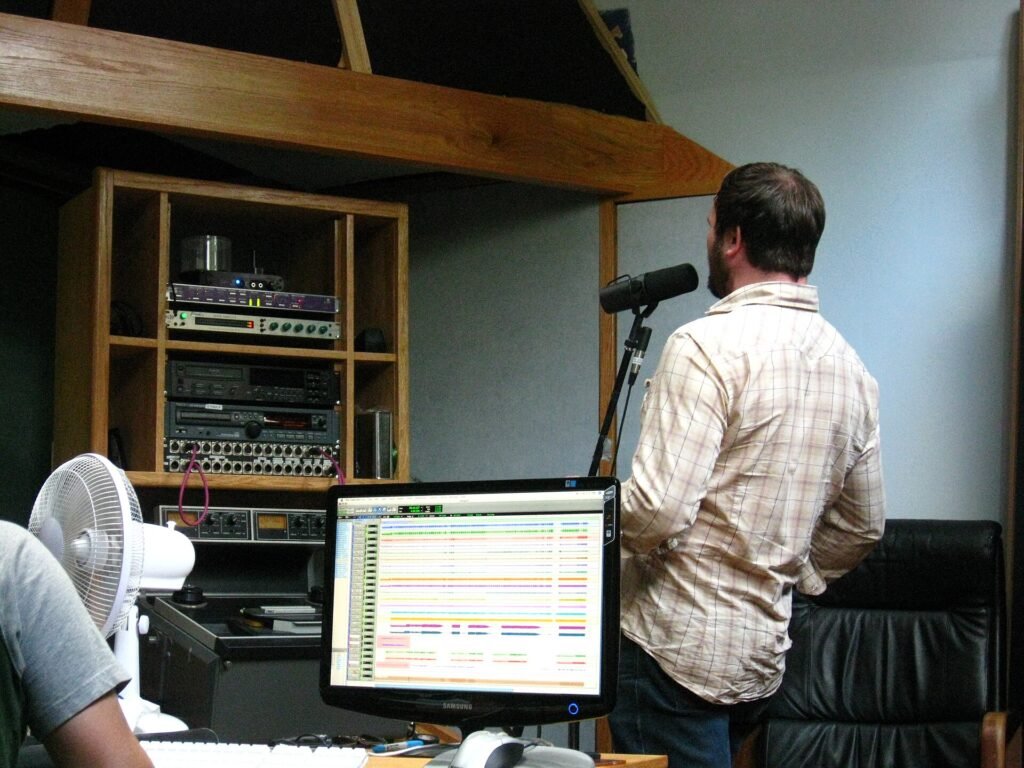
Studios can now release the same film or television show in dozens of languages simultaneously, compressing what once took weeks into hours. Artificial intelligence has begun transforming the dubbing process—the conversion of dialogue from one language to another—by automating transcription, translation, voice synthesis, and lip synchronization. Instead of booking actors in multiple countries to re-record dialogue, studios can run the original audio through AI systems that clone the lead actor’s voice, reproduce it in target languages, and match it precisely to screen movement.
This shift carries profound implications for production budgets, for the voice actors and dubbing professionals who have built careers dubbing films, and for studios navigating new legal obligations around consent and disclosure.
How AI Dubbing Works
The process unfolds in six coordinated stages. Speech-to-text software transcribes the original dialogue. Natural language processing translates the transcript into target languages. Text-to-speech engines generate spoken audio in each new language. Voice-cloning systems analyze the original speaker’s vocal characteristics—pitch, rhythm, texture—and reproduce them in the synthetic performance. Frame-level algorithms synchronize the new audio to match the actor’s on-screen mouth movements. Emotion-detection software attempts to preserve the affective qualities of the original delivery.
The workflow can process multiple languages in a single batch, generating dubbing for dozens of regions from a single pass through the system.
The Cost Difference
Traditional studio dubbing costs $50 to $200 per minute. AI-assisted dubbing costs $2 to $30 per minute—a reduction of up to 90 percent. Content that once took weeks to dub can now be processed in hours.
The Economics of Rapid Localization
Traditional studio dubbing costs between $50 and $200 per minute of finished footage. AI-assisted dubbing runs $2 to $30 per minute—a reduction of up to 90 percent. This cost structure has inverted the economics of global release. What once required coordinated teams across multiple facilities can now run through software. Content that previously required weeks to localize can be dubbed in hours.
Films that once took weeks to dub through traditional means can now be processed in hours, with the original actor’s voice reproduced across all versions simultaneously. The speed and cost savings mean studios can afford dubbed versions for markets previously underserved. Amazon Prime announced it would add “AI-aided dubbing on licensed movies and series that would not have been dubbed otherwise.”
Rights, Consent, and Voice Ownership
Using an actor’s voice to train an AI model requires explicit, written consent and a defined licensing agreement. A licensing agreement specifies what the voice can be used for, the duration of the license, whether the platform can sublicense the voice to third parties, and what compensation the actor receives. Voice actors who intentionally license their voices for AI synthesis earn royalties ranging from approximately $0.03 to $0.20 per 1,000 characters of generated speech, with compensation tied to actual usage.
The regulatory environment has begun to harden. Tennessee’s ELVIS Act, enacted in 2024, criminalizes unauthorized digital replication of a person’s voice and provides civil remedies for infringement. California, New York, Texas, and Illinois have introduced or strengthened similar statutes targeting unauthorized digital replicas.
Unlicensed Voice Cloning and Enforcement
The enforcement record reveals the gap between regulation and practice. Mexico recently banned the use of AI in dubbing and the unauthorized use of an actor’s voice by AI, following a campaign by voice actors. Enforcement remains inconsistent elsewhere: Indian voice actor Ganessh Divekar, who has dubbed Pedro Pascal’s roles in the Hindi-language Marvel franchise and Luigi in the Hindi-language Cars films, discovered his voice had been mixed with another actor’s using AI for a film without his consent, and said there was nothing he could do.
Studios considering AI dubbing must ensure that licensing agreements explicitly permit voice cloning, define which languages and media the synthetic voice can appear in, and establish whether the studio or the original actor retains certain rights. Contracts that predate AI-dubbing deployment often contain no provisions addressing these questions, creating ambiguity about whether a studio can create an AI version of an actor’s voice under existing agreements.
We make foreign content sound Brazilian with our Brazilian idiosyncrasies; with AI, we lose that.
What Dubbing Professionals Say
More than 2 million full-time and part-time voice actors worldwide face potential displacement as studios scale AI-assisted dubbing. Dubbing professionals emphasize that the technology cannot yet replicate local cultural nuance. “We make foreign content sound Brazilian with our Brazilian idiosyncrasies; with AI, we lose that,” one Brazilian dubbing professional noted. Local dubbing tracks have historically carried vocal performance choices, accent authenticity, and cultural markers that make dialogue sound natural to regional audiences.
Voice synthesis systems still flatten emotional range, struggling with crying, rage, subtle irony, or whispered intimacy. Amazon Prime’s removal of AI-generated English and Spanish dubs of anime titles including *Banana Fish* and *No Game No Life: Zero* after viewer criticism suggests that quality expectations for premium content remain high. The technology works best for secondary-language versions that would not otherwise be produced due to cost constraints. For flagship releases designed to reach core international markets, human dubbing remains the default.
Market Growth and Ongoing Disputes
The global dubbing market was valued at $4.2 billion in 2024 and is projected to reach $8.6 billion by 2034, according to market research firm Market.us. The first theatrical feature dubbed entirely with AI for a U.S. release was the Swedish science-fiction film *Watch the Skies* in 2025, using technology that met SAG-AFTRA compliance standards.
This expansion will likely force continued negotiation between studios, voice actors, regulators, and AI vendors over who controls voice data, how consent is documented, and what compensation actors deserve when their voices train AI models. The outcome will shape whether AI dubbing becomes a tool for expanding access to underserved markets or a mechanism for displacing established professionals while eroding the local cultural specificity that regional dubbing has historically provided.
Photo: eyeliam from Portland, United States · CC BY 2.0 · via Wikimedia Commons