
How Web VI and Phonorecords V Rates Are Set by Copyright Royalty Judges, From Notice to Ruling
Copyright Royalty Judges set webcasting and song-copy royalty rates through fixed notices, negotiations and Federal Register rules.
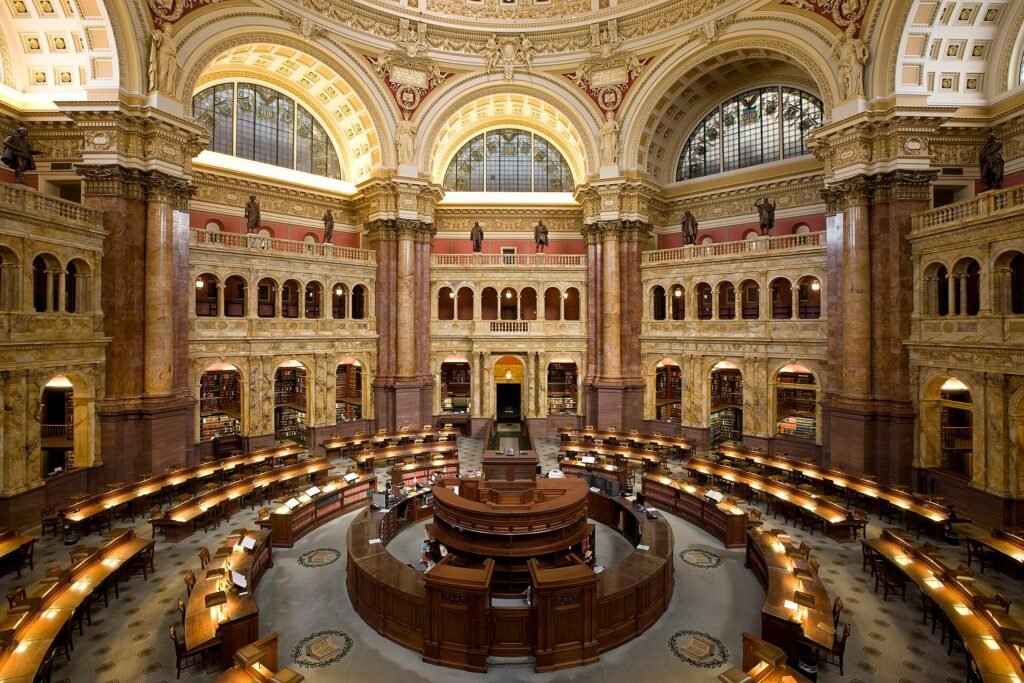
Webcasters that stream sound recordings and companies that make and distribute copies of songs pay royalties at rates set by the Copyright Royalty Board. The board is part of the Library of Congress, and its Copyright Royalty Judges decide the rates through a fixed sequence of public notices, filings and deadlines.
Two proceedings are covered here. Web VI sets rates for noncommercial educational webcasters for 2026 through 2030. Phonorecords V covers mechanical royalties for 2028 through 2032, and a partial settlement in that case was filed on June 29, 2026.
Which Licenses the Board Prices
The board sets rates for statutory licenses in the Copyright Act. Under section 114, webcasters pay for the digital performance of sound recordings. The Web VI rule applies that license to noncommercial educational webcasters and to related ephemeral recordings.
Under section 115, a company that makes and distributes phonorecords pays a mechanical royalty. The Phonorecords V notice describes its scope as rates and terms for making and distributing phonorecords under that license.
Petition Deadline
Under 17 U.S.C. 803, petitions to participate in a rate proceeding are due 30 days after publication of the Federal Register notice. The Phonorecords V notice sets a $150 filing fee.
Opening a Proceeding: Notice and Petitions
A rate proceeding begins with a notice published in the Federal Register. The Copyright Royalty Judges publish it, and the statute ties the deadline to the triggering event. Depending on the category, the judges must publish promptly after a determination or by January 5 of a year set in the statute.
For Phonorecords V, the notice was signed on December 23, 2025, and published on December 31, 2025. It covers the license period from January 1, 2028, through December 31, 2032. No petition had been filed, so the judges had to publish by January 5, 2026.
Parties that want to take part must file a petition within 30 days of the notice. For Phonorecords V, the filing fee is $150. The Phonorecords V petition deadline was January 30, 2026, and filings go through the eCRB system rather than as uploaded documents. A late petition can be accepted for substantial good cause and without prejudice to participants that have already filed petitions, but no later than 90 days before written direct statements are due.
Negotiation, Discovery and the Decision Clock
After the petition deadline, the judges publish a participant list and open a voluntary negotiation period of three months. Written direct statements are due on a date the judges set, no earlier than four months and no later than five months after that period ends. The judges may allow a participant to file an amended direct statement based on new information from discovery, within 15 days after the discovery period ends.
Discovery in connection with written direct statements is permitted for 60 days. A settlement conference then takes place within a 21-day period, held without the judges present.
The judges must issue their determination no later than 11 months after the settlement conference period ends. For successor rates tied to an expiration date, the determination is due no later than 15 days before the current rates expire.
How Web VI Ended in a Settlement
The Web VI case is docket 23-CRB-0012-WR. The proposed rule was published on October 11, 2024. The rates and terms came from a settlement between SoundExchange, Inc. and College Broadcasters Inc., presented in a joint motion to adopt a partial settlement. No Web VI participant objected, so the judges adopted the terms as proposed.
The final rule was signed on February 25, 2026, by Interim Chief Copyright Royalty Judge Trevor Jefferson and Judges David R. Strickler and Steve Ruwe. It took effect on March 10, 2026, and Acting Librarian of Congress Robert R. Newlen approved it. The Register of Copyrights reviewed it for legal error under 17 U.S.C. 803(f)(1)(D) and said she would not issue corrections. The judges describe the adoption as “principally a ministerial function.”
The rule sets an annual minimum fee per channel or station of $800 in 2026, $850 in 2027, $900 in 2028, $950 in 2029 and $1,000 in 2030. The minimum fee covers up to 160,000 aggregate tuning hours per channel or station each month. The reporting waiver is generally limited to webcasters at or below 80,000 hours, and webcasters that elect it pay a $100 annual proxy fee. Five percent of royalty payments are credited to ephemeral recordings and 95 percent to section 114 royalties.
The judges must issue their determination no later than 11 months after the settlement conference period ends.
What the Phonorecords V Settlement Covers
Music Business Worldwide reports that the partial Phonorecords V settlement was filed on June 29 by Sony Music Entertainment, UMG Recordings and Warner Music Group. A2IM, the NMPA, NSAI and the Music Artists Coalition also signed. The Songwriters Guild of America, Word Collections and songwriter George Johnson did not sign.
The settlement covers mechanical royalties in the United States for physical music, permanent downloads, ringtones and music bundles from 2028 through 2032. According to the same report, it keeps the existing rate structure except for annual inflation adjustments. The 2026 statutory rate is 13.1 cents per track or 2.52 cents per minute of playing time, whichever is larger, adjusted each year with the Consumer Price Index.
The report says the settlement does not resolve the streaming dispute, and that on-demand rates are set separately. It also says that if a non-signatory files an objection, the board can decline to adopt the settlement where it finds no reasonable basis for the rates. Comments and objections were due August 10. If the remaining rates were not agreed, written direct statements were due October 5.
What Follows a Determination
A determination is published in the Federal Register. A motion for rehearing must be filed within 15 days after the determination is delivered to participants. An appeal to the D.C. Circuit must be filed within 30 days after Federal Register publication.
For rates not tied to an expiration date, successor rates take effect on the first day of the second month that begins after Federal Register publication, unless otherwise provided or agreed by the participants. The Web VI minimum fees run from January 1, 2026, and the Phonorecords V license period begins January 1, 2028.