Why Live Broadcast AI Tools Are Raising GPU Costs 40 to 80 Percent
Real-time video processing tools from Nvidia and others are automating technical tasks in live broadcast. The infrastructure costs and labor shifts reshape how studios and broadcasters operate.
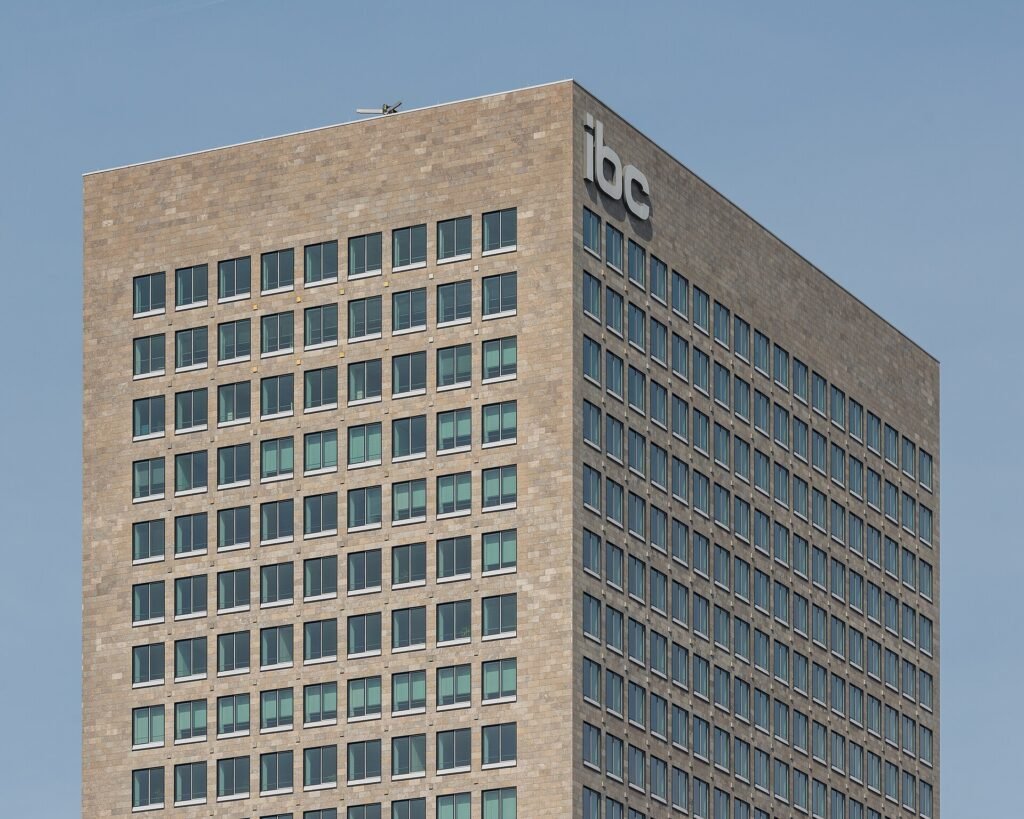
At IBC 2026, Nvidia expanded its AI for Media platform with generative tools for real-time video processing during live broadcasts. Video Frame Generation creates intermediate frames for slow-motion replays. Video Super Resolution upscales footage. These tools are entering production workflows at major sports broadcasters and studios, automating technical tasks that traditionally required specialized equipment or post-production time.
The shift is not costless. GPU capacity in public cloud environments is a bottleneck; processing costs have risen 40 to 80 percent in 2026 despite efficiency gains. Broadcasters adopting AI-enhanced workflows face a choice: invest in on-premises GPU infrastructure, rent capacity from cloud providers at premium rates, or operate a hybrid model. Understanding where these tools cut costs and where they create new demands is critical to assessing their business impact.
Frame generation and video processing in real time
Nvidia’s AI for Media platform includes several interrelated technologies. Video Frame Generation creates intermediate frames to boost apparent smoothness, enabling 2x or 4x frame rate increases without reshooting. Video Super Resolution upscales footage while reducing noise. TrueHDR converts standard-dynamic-range video to HDR in real time. A Synthetic Video Detector identifies AI-generated content with reported accuracy of 99.3 percent for text-to-video and 97.7 percent for image-to-video materials.
These tools run on GPU-accelerated infrastructure and integrate with Holoscan for Media, a platform allowing broadcasters to chain multiple AI capabilities together in software-defined workflows. Rather than replacing specific jobs, they automate technical tasks that traditionally required specialized equipment or post-production time.
Sports broadcasters use slow-motion replays to show key moments at frame rates higher than the original camera captured. Historically, this required either shooting at the higher frame rate during the game or using interpolation in post-production. Ross Video is integrating Nvidia’s frame generation technology into its Rio Replay platform for slow-motion replay generation in live sports production. The technology supports 6x slow-motion generation for sports replay.
Referee View at FIFA 2026
Lenovo’s stabilization algorithm reduced jitter by up to 60% and smoothed video by up to 70% while maintaining full HD quality at 60 frames per second with only 3 seconds of latency.
Referee View and broadcast-quality stabilization
During the 2026 FIFA World Cup, Lenovo deployed an AI processing pipeline demonstrating real-time media AI at scale. Referees wore small video cameras mounted on their heads, capturing a first-person perspective of match action. Raw referee-camera footage is inherently unstable due to head movement, rapid direction changes and variable lighting conditions.
Lenovo’s system ingests the feed from the on-body camera, analyzes each frame using trained AI models, and applies automated stabilization corrections. The output is consistent, broadcast-quality video at 60 frames per second with only 3 seconds of latency. The AI achieved up to 60 percent reduction in jitter and up to 70 percent smoother video trajectory while preserving image sharpness.
The pipeline is automated from capture to broadcast. This demonstrates how AI tools reshape labor allocation—the task moves from manual technical work to infrastructure management and model supervision.
GPU capacity and infrastructure costs
Real-time video processing at broadcast scale is computationally expensive. A late 2025 Deloitte Insights report found that while inference costs have dropped 280-fold over two years, overall AI spending has “outpaced cost reduction.” Broadcasters adopting AI-enhanced hybrid cloud workflows face mounting infrastructure costs despite efficiency gains.
GPU capacity in public cloud environments is a bottleneck. Processing costs rose 40 percent in the first part of 2026 and were up 80 percent later in the year, according to Grass Valley Chief Product Officer Adam Marshall. Server chip shortages have almost tripled server prices, with lead times extending to six months. Traditional broadcast infrastructure does not align with the demands of AI processing.
This creates a choice for broadcasters: build new on-premises GPU capacity, rent from public cloud providers at premium rates, or operate a hybrid model combining both. Lawo introduced a flexible payment model with dynamic credit adjustment based on fluctuating private versus public cloud usage. This suggests broadcasters are still optimizing their AI infrastructure strategies and expect costs to remain variable.
Broadcasters adopting AI-enhanced workflows face a choice: invest in on-premises GPU infrastructure, rent capacity from cloud providers at premium rates, or operate a hybrid model.
Labor allocation and technical workflow shifts
AI tools reduce specific technical roles while creating new demands for others. Some of that work moves to training AI models and managing pipelines.
Content localization becomes faster. Broadcast live events globally without waiting for post-broadcast dubbing, captioning and graphics translation. This compresses the timeline from production to distribution—critical value for live sports where clips spread globally within minutes.
The labor shift is not a direct replacement. Graphics teams still generate graphics; they use AI-assisted tools rather than building each element by hand. Colorists still grade shots; they supervise AI color correction rather than applying grading manually. Dubbing teams still localize dialogue; AI handles voice synthesis and lip-sync while they supervise and adjust. The workflow changes the ratio of creative work to technical execution.
Economics at production scale
Real-time AI becomes economically sensible at scale. For smaller productions, the fixed cost of infrastructure remains a barrier.
This creates a bifurcation in broadcast production. High-budget operations adopt these tools because scale justifies infrastructure investment. Mid-tier and regional broadcasters face a choice: invest in hybrid cloud infrastructure or remain dependent on slower post-production workflows. Neither choice is clearly cost-positive for all operations.
Nvidia’s platform position is to make these tools available through software rather than requiring hardware procurement. Broadcasting on Holoscan for Media allows studios to integrate frame generation, voice processing, video upscaling and synthetic detection without building their own AI pipelines. The cost shifts from capital equipment to GPU rental and software licensing—more flexible but not necessarily cheaper.
Photo: DXR · CC BY-SA 4.0 · via Wikimedia Commons