
How a Jury Verdict and a DOJ Deal Split the Live Nation Antitrust Case
A New York jury found Live Nation and Ticketmaster liable in April, while a March DOJ settlement set separate venue, fee and ticket-access terms.
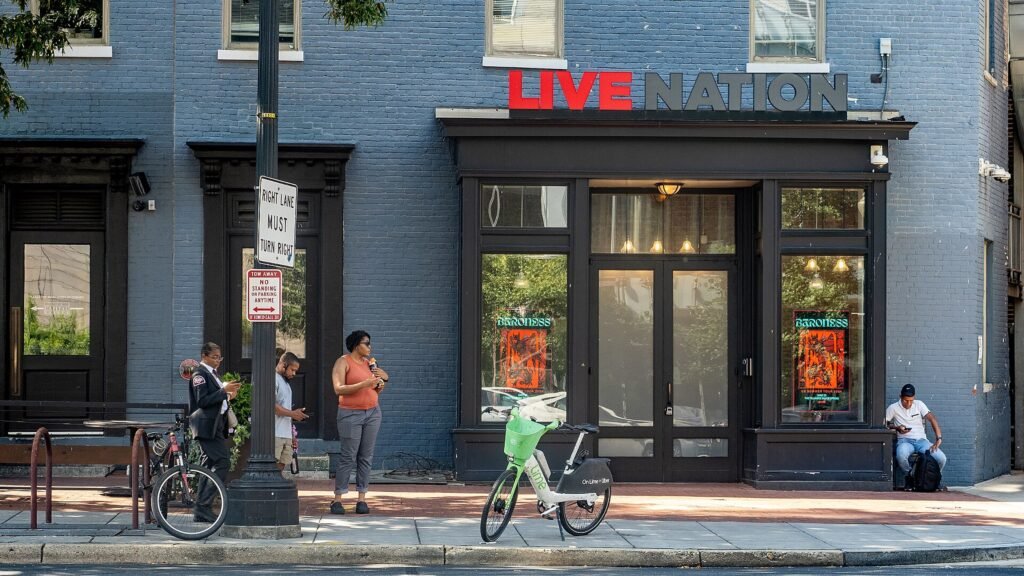
A New York jury found on April 15, 2026 that Live Nation and Ticketmaster had illegally maintained monopoly power. The Justice Department had settled with the companies in March, so the verdict came from states that pressed on to trial. The coalition included Attorney General Ellison and 33 other attorneys general, according to the Minnesota Attorney General’s office.
The two outcomes now run on separate tracks. A federal settlement sets terms for specific venues, fees and ticket access and goes through court review, while the states’ case moves to a separate remedy phase. The reported figures differ across sources, and those differences are noted below.
What the April Jury Found
The jury found Live Nation and Ticketmaster liable under federal and state antitrust laws. It found that Ticketmaster unlawfully maintains a monopoly in ticketing services at major concert venues, according to the Minnesota release.
The jury also found that Live Nation holds a monopoly in large amphitheaters and unlawfully requires artists who use the amphitheaters it owns to also use its event promotion services.
The release says fans were overcharged for concert tickets at major venues nationwide, but it gives no per-ticket figure. WTOP’s report of the verdict says the jury deliberated for four days. It cites a states’ attorney, Jeffrey Kessler, who said Live Nation controls about 86% of the concert market and about 73% of the overall market when sports are included.
The company says the verdict is not the last word. WTOP reports that Live Nation’s prediction about the outcome applies once the remedy phase and all appeals are resolved.
Reported Overcharge
WTOP reports a jury finding that people in 22 states paid an extra $1.72 per ticket. Live Nation says single damages are below $150 million before trebling.
How the March Federal Settlement Was Announced
CBS News reports that the settlement was announced on Monday, March 9, in Manhattan federal court, about a week after the trial began. Ticketnews reports that the deal does not require Live Nation to divest Ticketmaster.
CBS News describes the amphitheater term as a requirement that Ticketmaster divest 13 amphitheaters, possibly more if additional states endorse the settlement. Ticketnews describes it differently. In its account, Live Nation would relinquish booking, promotion or control rights at 13 specified venues in states including Alabama, Arkansas, Michigan, New York, Texas and Wisconsin, and could not reassert control or enter preferred booking agreements there.
Ticketnews adds that within 30 days of court approval, Live Nation and Ticketmaster would terminate a 2022 incentive agreement with Oak View Group.
Ticketnews names six states that settled alongside the DOJ: Arkansas, Iowa, Mississippi, Nebraska, Oklahoma and South Dakota. CBS News says 40 states sued, while the Minnesota release counts Attorney General Ellison and 33 other attorneys general in the trial coalition.
Ticket Access, Fees and Venue Contracts
Under the settlement, Ticketmaster would build an open distribution and ticket authentication system. Qualifying third-party primary ticketing providers could sell tickets allocated by venues that still use Ticketmaster’s back-end, according to Ticketnews. The system would have to be fully operational 275 days after final judgment, so its timeline depends on the court’s decision.
Ticketmaster could still charge providers fees tied to its infrastructure, subject to a court-appointed monitor. The monitor would also decide disputes over a provider’s eligibility and over venue contracts, and the DOJ could seek a court ruling on eligibility disputes.
CBS News says Ticketmaster must offer venues a non-exclusive option and cannot retaliate against companies that choose a different primary ticketer. Venues and artists may be exclusive with Live Nation for up to 50% of tickets, and the rest must be available to other sellers. Ticketnews gives the same 50% share for distribution through third-party providers at Live Nation amphitheaters.
Under Ticketnews’ summary, existing contracts would lose automatic renewals. A venue could use another eligible provider for one event a year. On contracts with at least four years left, venues could allocate up to 20% of inventory to third parties, and fully exclusive deals would be capped at four years.
Both sources place the fee cap at amphitheaters. Ticketnews says the 15% cap applies to Ticketmaster’s own service fees on its sales, measured as a share of face value. CBS News describes the same 15% service fee cap.
The April verdict and the March settlement now run on separate tracks, with different terms.
Where the Money Figures Differ
The overcharge figure comes from the jury finding reported by WTOP: people in 22 states paid an extra $1.72 per ticket. Live Nation says that applies to a limited number of tickets sold at 257 venues, about 20% of total tickets sold, and estimates single damages below $150 million before trebling.
The settlement payments are reported differently. CBS News says Live Nation agreed to pay $280 million in civil penalties to the 40 states that sued. Ticketnews reports about $18.56 million in payments to six settling states, separate from a $280 million fund tied to broader state claims.
The per-ticket finding belongs to the states’ trial, and the payment figures are reported in connection with the settlement, so the two are reported separately.
Court Review and the Remedy Phase Ahead
The settlement goes through Tunney Act review, which includes public notice and a 60-day comment period before the court decides whether it serves the public interest. Ticketnews reports that Judge Arun Subramanian of the Southern District of New York entered a stipulation and order that lets some provisions take effect while review is pending. The order is not final approval.
Comments were due September 4. Under the process described by Ticketnews, comments are published at the end of the comment period, with the names of those who submit them. The court has not yet decided whether to enter the judgment.
CBS News names 25 states and the District of Columbia that plan to move forward with the lawsuit, including New York. The New York attorney general’s office said it would continue the lawsuit with more than two dozen other states, and the DOJ expects more states to back the deal.
The states’ case has a separate remedy phase. The Minnesota release says remedies and financial penalties will be decided at a bench trial with the date to be set soon, and that the coalition will seek relief for consumers, artists and venues, including dismantling the monopolies. WTOP reports that possible outcomes include repayment of the overcharge and court-ordered divestiture of some entities, such as amphitheaters.
Live Nation expects the eventual outcome to resemble its federal settlement, according to WTOP.