How Range Media’s Box Office Hits Led to a Paramount First-Look Deal
A management company's shift to production mirrors how talent-founded firms now compete with traditional studios.
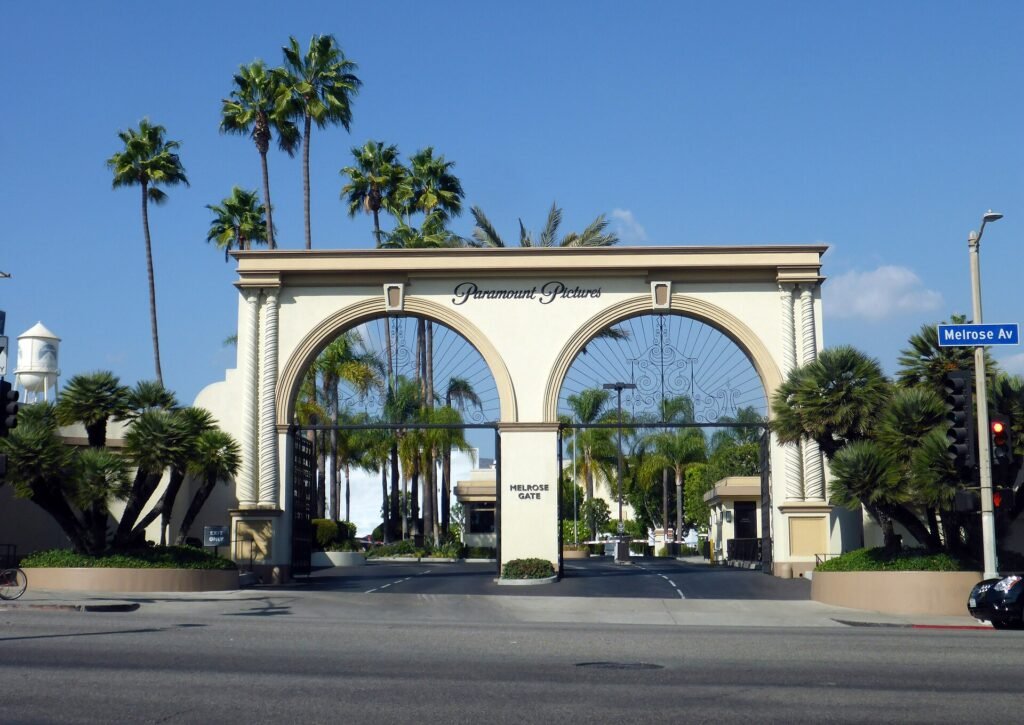
Range Studios, the production arm of Range Media Partners, is in final talks for a two-year first-look deal with Paramount Pictures. The arrangement places Range among an expanding group of production companies that have built enough commercial momentum and talent relationships to secure development funding and distribution agreements from major studios.
Range’s path to the Paramount deal illustrates how founders with deep talent-agency experience can translate that network into production leverage. Six years after launching as a management firm, Range has produced or financed two films that each grossed over $100 million worldwide and merged with an established production company, Automatik. That combination of recent hits and roster size gave Range negotiating power in a market where studios have become far more selective about backing independent producers.
From talent management to production company
Range Media Partners was founded in September 2020 by 13 former talent agents and executives from CAA, UTA and WME. The company emerged during an exodus of high-level dealmakers from traditional agencies, part of a broader shift toward independent talent representation. Co-founder Peter Micelli was a longtime CAA agent before becoming chief strategy officer at Entertainment One. The founders’ decision to launch their own firm reflected changing assumptions about how talent representation and production should work.
Range Media Partners was backed by Steve Cohen’s Point72 Ventures. Range began as a management firm leveraging the founders’ existing client relationships. It gradually expanded into production, positioning itself as a vertically integrated company combining talent representation, content production and financing—a model that compressed what would have historically taken multiple separate firms.
Overall and first-look deals by the numbers
Active producer pacts declined from 902 in 2019 to 556 by May 2026. Film deals increased 57 percent to 217, while television deals fell 56 percent to 339.
Building leverage through box office success
Range had no films in production when it launched. Expansion into production happened gradually, but accelerated in 2024. The horror film “Longlegs,” produced by Range alongside C2 Motion Picture Group, Traffic, Oddfellows and Nicolas Cage’s Saturn Films, grossed $128 million worldwide on a budget under $10 million. That same year, “A Complete Unknown,” the Bob Dylan biopic released by Searchlight Pictures, grossed $140.5 million worldwide: $75 million domestically and $65.5 million internationally.
Those results—films that performed in the mainstream market rather than niche categories—served as Range’s primary calling card in negotiations. Studios measure whether a production company understands audience appeal and can execute at scale. Two $100-million-plus films in a single year demonstrated both capabilities. Longlegs achieved particular leverage value because it was an original property, not an adaptation or continuation, proving Range could develop high-concept material that resonated broadly.
Strategic acquisition and operational scale
In 2023, Range merged with Automatik, an independent production company with its own slate of developed projects and established studio relationships. The acquisition gave Range an immediate portfolio of projects in various development stages and the operational infrastructure to manage multiple productions simultaneously. Automatik’s track record with studios became Range’s track record overnight.
That move resembles the consolidation strategy major studios have used for decades: buying boutique production companies to gain both their projects and their decision-making authority. For an independent shop, acquisition meant jumping several years ahead in track record and operational scale. Studios value production companies that have already proven they can execute multiple projects concurrently, and acquisitions compress that credibility-building.
How first-look deals work and what they provide
A first-look deal grants a studio priority to review projects from a producer before they’re pitched elsewhere. Standard terms give the studio 30 to 60 days to decide. If Paramount passes, Range is free to shop the project to other studios or streamers. The distinction matters: a first-look arrangement preserves autonomy if the primary buyer declines, whereas an overall or exclusive deal ties the producer more tightly to a single studio for a multi-year term.
In an overall deal, by contrast, a creator becomes “essentially an employee of the studio for the duration of the contract.” The studio pays substantially more, but the creator cannot take work anywhere else, even if the studio declines projects. Overall deals also include guaranteed development funds and production bonuses tied to milestones. First-look arrangements offer lower overhead, but with more creative freedom.
In return for first-look rights, studios typically fund development infrastructure—office space, development executives, a small team, and budgets for script development and option purchases. Importantly, overhead functions as an advance recoupable against future production payments; it is not free money the producer keeps. That structure creates alignment: the studio’s development investment comes back to them if projects get greenlit.
Market contraction and selective studio strategy
The market for producer overall and first-look deals has contracted sharply. Between 2019 and May 2026, the number of active producer pacts tracked by entertainment industry reports fell from 902 to 556—a 38 percent decline. The pullback was uneven by sector. Film-focused producer deals increased 57 percent to 217 active arrangements, but television deals collapsed 56 percent to 339 from a 2018 baseline of 764.
The decline reflects a correction from the peak streaming era. Between 2020 and 2022, Netflix and other platforms signed overall deals at rates that shocked traditional studios. That pace proved unsustainable when subscriber growth slowed and budget pressures hit in 2023. A significant number of overall deals were not renewed when they expired, and studios reduced development overhead dramatically.
Studios now concentrate their development funding on producers with the most proven track records. Box office success has become the primary leverage point. Range’s timing—landing a major studio first-look deal after two consecutive $100-million films—reflects that compressed marketplace. Paramount’s willingness to back Range demonstrates how much weight recent box office results carry when production companies negotiate.
Access to talent and project packaging
Range’s existing slate illustrates why studios value first-look arrangements with producers who maintain deep talent relationships. In development are “Bald Eagles,” an R-rated workplace comedy that Paramount preempted in a competitive deal, and a follow-up from director Osgood Perkins (who made “Longlegs”) paired with Nicolas Cage, slated for January 2028 release.
For Paramount, the deal supplies access to those projects and to Range’s talent roster. The founding partners represent actors, writers and directors—a built-in advantage when assembling creative teams. Range’s dual identity as both management firm and production company allows it to package clients directly into projects, reducing attachment time and negotiation overhead. That vertical integration is a core competitive advantage over traditional production companies without talent representation arms.
What the deal means for Range’s position
If finalized, the Paramount arrangement would formalize Range’s transition from boutique talent management to studio-backed production company. Two years of first-look rights would give Range guaranteed development funding and the institutional support of a major studio, while preserving the freedom to shop projects elsewhere if Paramount declines them.
The deal also signals to investors and to other studios that Range has cleared a credibility threshold. Talent-founded production companies still face skepticism from institutional investors and studios accustomed to legacy structures. A major first-look deal from Paramount reduces that friction for future fundraising or partnerships. Range’s trajectory—from zero film production in 2020 to a Paramount deal by 2026—compressed a timeline that might have taken a decade a generation ago. That acceleration depended on founder relationships, willingness to finance or co-finance early projects, and willingness to acquire existing operations to bypass years of track record-building.
Related coverage: What a first-look deal gives a studio, and what it gives up; How overall and output deals fund production companies, and why terms fell since 2021.
Photo: Coolcaesar · CC BY-SA 4.0 · via Wikimedia Commons