Chandra Reveals Fiery Galaxy Collision in New Image
NASA released a new composite image showing two galaxies violently merging in the II Zw 096 system, captured by Chandra, Hubble and Webb.
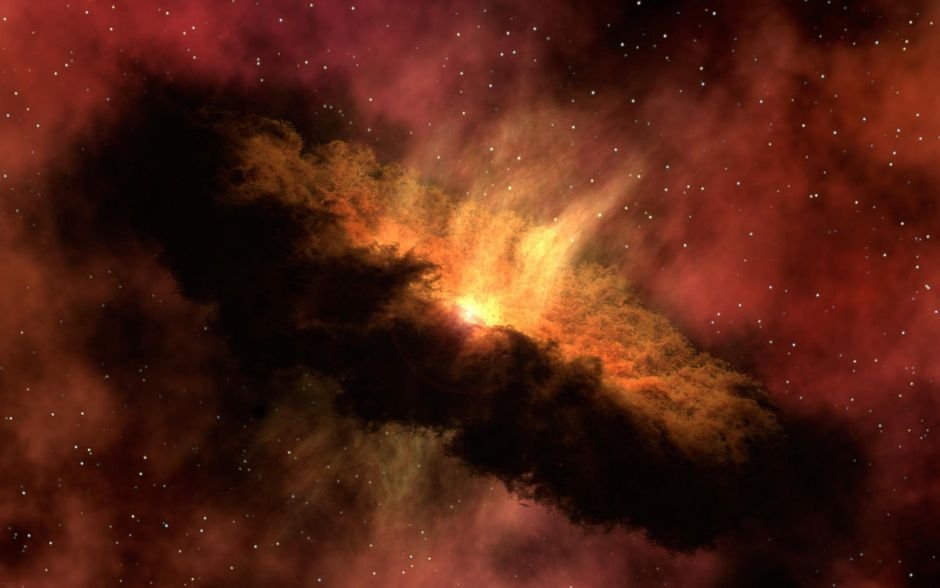
NASA has released a striking new composite image of two galaxies in the throes of a violent merger, offering scientists a rare, detailed look at the forces that shape galactic evolution. The image, dated Aug. 25, 2026, shows the system known as II Zw 096, where colliding galaxies are triggering intense bursts of star formation and black hole activity.
The picture combines data from three of NASA’s premier space observatories. X-ray observations from the Chandra X-ray Observatory, shown in magenta, reveal powerful black hole activity and pockets of superheated gas within the system. Optical data from the Hubble Space Telescope, rendered in blue and white, and infrared observations from the James Webb Space Telescope work together to expose stellar nurseries that would otherwise remain hidden behind thick clouds of interstellar dust.
According to NASA, the release is part of a broader collection of images highlighting galaxies that are both visually striking and scientifically significant. Officials with the agency said systems like II Zw 096 provide a window into how galaxy collisions may have shaped the structure of the early universe, when such mergers were far more common than they are today. The layered imaging technique allows researchers to see through dust that would otherwise obscure critical details about star birth and black hole feeding activity occurring deep within the merging galaxies.
Multiwavelength imaging of this kind has become a cornerstone of modern astrophysics, allowing scientists to study different physical processes that occur simultaneously within a single cosmic object. X-ray data typically traces extreme-energy phenomena such as material falling into black holes or gas heated to millions of degrees, while infrared observations penetrate dust clouds to reveal newly forming stars. Optical light, meanwhile, captures the more familiar visible structure of galaxies, including their spiral arms, cores and surrounding star fields.
Galaxy mergers like II Zw 096 are considered important laboratories for understanding cosmic history. Astronomers believe that large galaxies, including the Milky Way, grew over billions of years through repeated collisions and absorptions of smaller galaxies. These events can compress gas clouds and ignite waves of star formation, sometimes producing so-called starburst regions where stars are born at rates far exceeding those seen in quieter, more isolated galaxies. Studying nearby examples of these interactions helps scientists model conditions in the distant, early universe, when mergers occurred more frequently and played a larger role in building the galaxies observed today.
The Chandra observatory, launched in 1999, has spent more than two decades detecting X-ray emissions from some of the most energetic objects in space, including black holes, neutron stars and the remnants of exploded stars. Pairing its data with imagery from Hubble and Webb, both of which observe in different wavelengths of light, allows researchers to build far more complete pictures of complex astronomical systems than any single instrument could produce alone. Such collaborative imaging efforts have become increasingly common as NASA seeks to maximize scientific return from its fleet of space-based telescopes.
NASA noted that the II Zw 096 image is one of several new galaxy pictures made available to the public as part of this release, with additional photographs accessible through the agency’s Chandra image gallery. The agency framed the release as both a scientific resource for researchers and a visual showcase intended to illustrate the dynamic, ever-changing nature of the universe.
This article is based on information from a press release published by NASA.