How costume departments keep clothing continuous across scenes filmed weeks apart
Set costumers, script supervisors, costume coordinators and photography documentation systems work together to ensure actors' wardrobes remain visually consistent across out-of-sequence filming that may span months.
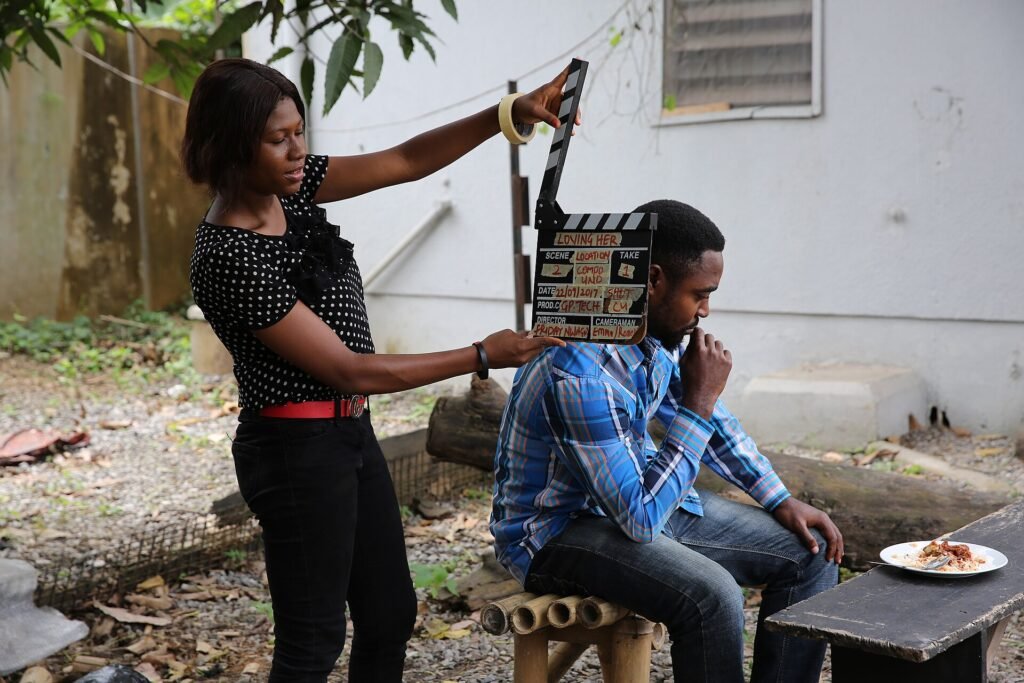
When a film or television production shoots a scene, it rarely films in narrative order. An actor’s first scene on screen might be filmed weeks or months after the second scene, or vice versa. Yet when audiences watch the final product, clothing appears unchanged from shot to shot. This visual consistency requires the costume department to track hundreds of specific details—the exact drape of a scarf, the number of unbuttoned buttons on a shirt, the precise position of every visible accessory—across potentially months of out-of-sequence filming.
The process relies on overlapping systems of documentation, dedicated personnel and backup garments, all designed to catch and prevent the continuity errors that break a viewer’s immersion. For productions without this infrastructure, a single mistake—a missing piece of jewelry in a close-up, a jacket worn differently in an adjacent scene—can distract viewers from the story. Even classic films like The Wizard of Oz (1939) show the challenge: Dorothy’s hair changes from pigtails to plaits to a half up-do throughout the film, sometimes within the same scene.
Photography as the primary reference tool
The foundation of costume continuity is the photograph. Before each scene is filmed, the set costumer photographs the actor, creating a detailed visual record of the exact state of the costume at that moment. These photographs document the specific garment, its condition and placement on the body, the positioning of every accessory, the state of any deliberate distress or aging applied to the costume.
This practice evolved significantly over decades. Tracking of costume details was once done with notes and sketches, then by polaroids, and now by smartphones. This technological progression has heavily assisted the job, though it isn’t clear that it has made the job any easier. When a scene is filmed days or weeks later in the same location or with similar camera angles, the set costumer references these photographs to recreate the exact appearance.
Costumers pay particular attention when filming similar scenes in the same location that should show plot-relevant differences. If a costume has been damaged, cleaned or altered during the interim, the reference photos guide the necessary adjustments to return it to its documented state.
Why costumes stay at the filming location
Wardrobe departments enforce a practice of keeping costumes at the filming location rather than allowing actors to take pieces home. This prevents outfit inconsistencies between shooting days.
The costume bible and character breakdowns
Costume departments maintain a document called the Costume Bible, which serves as the authoritative record for each production. This document includes photographs of the actors wearing costumes in each scene alongside director’s notes, captured both before and after every scene is filmed. By organizing this visual information by shooting day, the Costume Bible gives costumers a day-by-day continuity reference across the production.
Complementing the Costume Bible are character breakdowns—script checklists organized by character rather than scene. These documents track which outfit each character wears in each scene, accounting for changes that occur within a scene or across scenes. One illustrative example: without careful tracking, someone could start a scene in a red T-shirt and finish it in a blue jumper.
Together, these tools create a comprehensive reference system that prevents an actor from accidentally wearing the wrong costume or wearing an outfit incorrectly. Character breakdowns also track character evolution throughout the story, with set costumers interpreting scripts to understand how a character’s outfit reflects their development from beginning to end.
Department roles and structure
The wardrobe department handles every garment visible in a production through specialized roles that divide continuity, logistics and creative responsibilities. The costume designer leads the department, reading the script and collaborating with the director to understand the overall vision and ensure costumes align with story needs. For larger productions, this leadership extends across multiple roles.
The wardrobe supervisor manages day-to-day logistics, continuity tracking and wardrobe maintenance, while the costume coordinator handles administrative tasks like purchase tracking and garment logging. A costume shopper sources wardrobe items from retailers and rental houses, and tailors construct or modify garments for fit and creative specifications. On larger productions, a textile artist may handle aging effects and fabric manipulations.
The newest addition to costume departments is the digital costume artist, a role that bridges traditional costume design and visual effects for digital doubles. Smaller productions often consolidate these responsibilities, with the costume designer managing multiple functions. Regardless of structure, one person is designated for continuity tracking, though everyone on set remains vigilant for errors.
The set costumer’s on-set workflow
The set costumer serves as the on-set guardian of continuity, managing wardrobe pieces for each actor and translating the costume designer’s vision into practice. Before the director calls action for each scene, the set costumer takes comprehensive photographs and detailed notes documenting the costume’s exact state. During filming, the set costumer watches the performer and makes adjustments as necessary, whether fixing a minor tear or adjusting a shirt collar to ensure proper continuity.
Set costumers organize costumes using multiple systems simultaneously: digital databases for tracking costume pieces, physically labeled bins and hangers organized by character and scene, and comprehensive photo catalogs for reference. They track weather-induced or action-induced changes to wardrobe and manage on-the-spot adjustments when unexpected circumstances arise. A critical practice involves keeping actors’ costumes at the filming location rather than allowing them to take pieces home, preventing outfit inconsistencies within scenes.
The set supervisor also communicates special costume requirements to special effects, stunts and visual effects departments when action sequences demand additional preparation.
Tracking of costume details used to be done purely by notes and sketches, then by polaroids, and now by smartphones.
Redundant tracking across departments
Costume continuity relies on redundancy: if one department misses an error, others catch it. Hair, makeup, costume and camera departments all maintain their own continuity tracking and notetaking systems. These records correlate with the script supervisor, who sits on set tracking physical continuity details and the precise moment actions occur throughout filming, and on some productions also tracks performance consistency between takes.
Script supervisors document hair, makeup, props, wardrobe and actor movements, creating a secondary check on the costume department’s work. For a continuity error to reach audiences, it must slip past multiple checkpoints, from actors and the script supervisor to camera operators, directors, editors and producers. This distributed responsibility ensures multiple people must miss an error for it to be seen by viewers.
When the costume department’s records align with the script supervisor’s notes and with visual documentation from camera crews, production teams have confidence that a scene’s visual continuity is accurate.
Costume duplicates for action and wear
Costume departments create multiple identical versions of key garments. This approach accounts for wear and tear from action, weather conditions, or unexpected on-set situations. Action sequences and stunts require additional duplicates, and the set supervisor communicates special costume requirements to the special effects, stunts and visual effects departments.
Set costumers handle aging, distressing and sometimes creating multiple duplicates of costume pieces to show realistic wear and character development. On-set emergency repairs may also necessitate duplicate garments. If an original costume is damaged unexpectedly, a duplicate allows filming to continue without delays or continuity breaks.
The availability of backup costumes provides flexibility for long production schedules, allowing garments to be cleaned and maintained between filming days while ensuring a matching piece remains ready for immediate use.
Photo: FridayFilmboy · CC BY-SA 4.0 · via Wikimedia Commons