
Why Copyright Covers Only the Human-Made Parts of AI-Assisted Films, Songs and Scripts
U.S. copyright requires a human author, but the Copyright Office says the human-made parts of AI-assisted works can be protected.
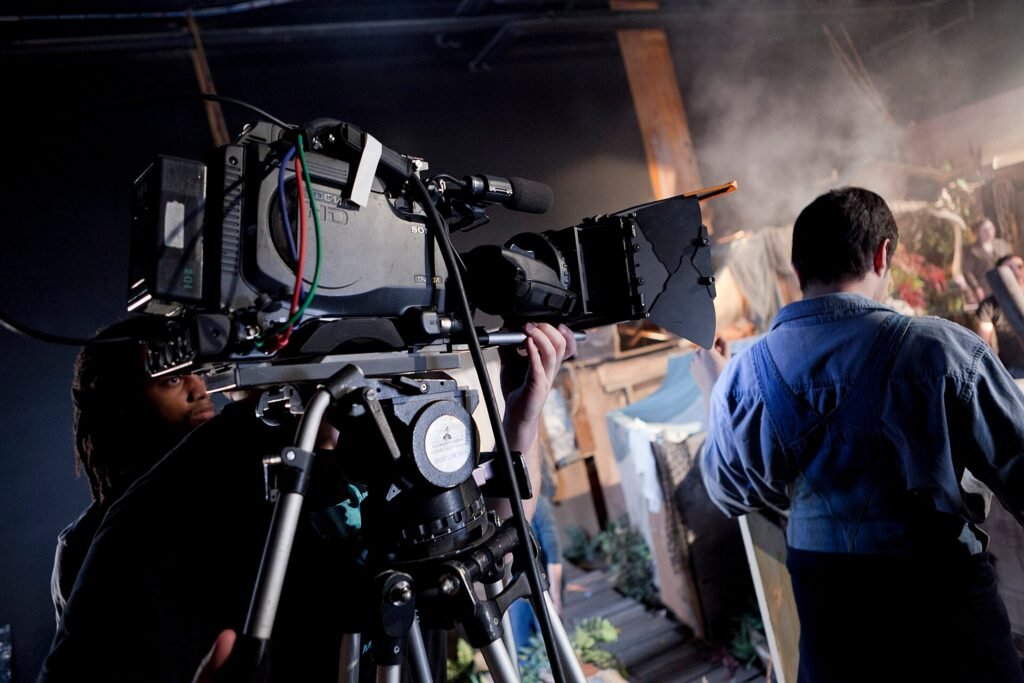
U.S. copyright protects works of human authorship. A film, song, script or artwork made with AI tools can be registered only where a person contributed enough original expression, and the Copyright Office has issued guidance on how that test applies.
The framework described here is for producers, record labels and other companies that use generative tools. It rests on the Copyright Office’s January 2025 report on AI outputs, its registration decisions, a federal appeals ruling and the Supreme Court’s March 2026 denial of review.
Where the Human Authorship Rule Comes From
The clearest test case involves an image called A Recent Entrance to Paradise. Stephen Thaler’s AI system generated it, and the application listed that system as the author. Jones Day’s Meredith Wilkes says the system was called the Creativity Machine, and Emily Tait says no human contribution was claimed. The Copyright Office’s Review Board decided the application on Feb. 14, 2022, according to the Office’s AI page.
The Copyright Office refused registration because no human was listed as an author. Thaler challenged the refusal in federal district court, which ruled for the government on summary judgment, and the D.C. Circuit affirmed. Jones Day reports that the court held copyright requires human authorship, calling it a “bedrock requirement of copyright.” Jones Day says the statute never names a human author outright, but that reading it as a whole supports the requirement.
Jones Day’s Meredith Wilkes says there is some consensus that the Copyright Act implies a human authorship requirement. One reason given is that the copyright term is tied to a human’s lifespan.
On March 2, 2026, the Supreme Court denied review in the case, No. 25-449, according to SCOTUSblog. The question presented asked whether a work that an AI system produces, without a direct contribution from a natural person, can be copyrighted. Jones Day says the Court declined to address the question, which leaves the D.C. Circuit ruling in place.
Prompts Alone Are Not Enough
The Copyright Office’s Part 2 report, released Jan. 29, 2025, says that the mere provision of prompts is not enough to protect an AI output.
What the Office Says About Prompts and Control
The Copyright Office’s Part 2 report, released Jan. 29, 2025, says AI outputs can be protected only where a human author has determined sufficient expressive elements. Existing copyright principles are flexible enough to apply, according to the Office.
Under the report, the mere provision of prompts is not enough for protection of what comes back.
Jones Day’s Emily Tait says human authors need to stay in control of the creative output. Tait also says the Office has indicated that a detailed prompt, or an idea without more, is unlikely to qualify for protection.
Jones Day reports that it is unclear how much control or creative input a human must show. Its speakers say a detailed prompt alone is unlikely to suffice. Companies may need to document their human contributions to register works or defend them in disputes.
Which Parts of an AI-Assisted Work Can Be Protected
The report addresses protection for AI outputs and for AI-generated material included in a larger human-generated work. Protection can apply where a human-authored work remains perceptible in the output. It can also apply where a human makes creative arrangements or modifications of the output.
Using AI to assist creation does not bar copyrightability, and neither does including AI-generated material in a larger human-made work, according to the report.
Jones Day gives one example from its speakers. Tait describes a human-drawn sketch that is then enhanced with an AI tool, and says the Office has indicated the result could qualify if the AI-generated contributions are disclaimed.
Jones Day’s speakers say there is no percentage or bright-line rule for how much human input is enough. They describe the analysis as fact-specific, similar to fair use. Tait expects courts to clarify the issue over time, but describes true clarity as a long way off.
The mere provision of prompts is not enough for protection of what comes back.
How the 2023 Registration Guidance Fits In
The Office published its registration guidance for works containing AI-generated material on March 16, 2023. It appeared in the Federal Register at 88 Fed. Reg. 16,190. The Office announced its AI initiative the same day, according to its AI page.
Copyright Alliance, in a March 28, 2023 summary of the guidance, says applicants must disclose AI-generated content and briefly explain the human author’s contributions. Prompts alone are not enough to claim authorship, the summary says. Applicants should describe their own choices, such as selecting, coordinating and arranging AI output, and claim only the human-authored portions.
According to the same summary, AI-generated material that is more than de minimis should be excluded from the application. Material is de minimis when it lacks the minimal original creative expression needed for copyright, and brief quotes and short phrases may fall into that group. The summary says works containing AI-generated material must be registered on the Standard Application, which has a field for excluding unprotectable material.
The AI page lists four decisions with dates: A Recent Entrance to Paradise (Review Board, Feb. 14, 2022), Zarya of the Dawn (Registration Decision, Feb. 21, 2023), Théâtre D’opéra Spatial (Review Board, Sept. 5, 2023) and SURYAST (Review Board, Dec. 11, 2023).
The AI page also lists a Notice of Inquiry issued Aug. 30, 2023, at 88 Fed. Reg. 59,942. The Part 2 announcement says the Office plans to supplement the March 2023 guidance.
What Remains Unsettled for Studios and Labels
In the Part 2 report, the Office found that the case had not been made for changing existing law to give AI outputs additional protection. In a separate Part 1 report published July 31, 2024, the Office recommended federal legislation addressing unauthorized digital replicas.
The Office reviewed more than 10,000 responsive comments for Part 2. Part 3, which covers training AI models on copyrighted works, was still forthcoming when Part 2 was released. The AI page says a pre-publication version of Part 3 was released May 9, 2025, and that a final version will be published in the future, without substantive changes expected in its analysis or conclusions.
Wilkes says Congress has not amended the statute, and that for now the Copyright Office has provided guidance on the nature and extent of human interaction. Jones Day notes there is no circuit split on the issue.
The petition in Thaler was filed Oct. 9, 2025, and the federal government’s brief in opposition came on Jan. 23, 2026, according to SCOTUSblog. The Office’s AI page also lists Allen v. Perlmutter among its litigation items.
The open questions are the line between AI assistance and unprotectable output, the amount of human control required, and how contributions should be documented. Jones Day’s speakers say that if AI contributions must be disclaimed, an applicant should be able to identify which parts the human created, and that clear records matter in disputes.