Why the NO FAKES Act Would Create the First Federal Protection for Actors’ Likeness
Actors currently rely on a patchwork of state laws to protect their voices and likenesses from unauthorized artificial intelligence.
Actors suing over unauthorized artificial intelligence replicas of their voices or faces currently navigate a fragmented legal system. Some states offer broad protections through their right-of-publicity statutes; others leave actors with only common law recourse. This inconsistency has prompted bipartisan congressional action: the NO FAKES Act passed the Senate Judiciary Committee unanimously on June 18, 2026, and now awaits a full Senate vote.
The federal bill would establish the first uniform national protection for actors’ voices and visual likenesses from unauthorized digital recreation. But understanding what it would change requires examining what protections already exist—and what gaps remain.
What States Currently Protect
Every state recognizes some form of common law right against the unauthorized use of a person’s name, image, or likeness. However, only about 30 states have enacted statutory protections for this “right of publicity,” and those laws vary significantly in scope and enforcement.
California has been among the most expansive, passing AB 1836 to extend post-mortem publicity rights to artificial intelligence-generated replicas, and AB 2602 to require informed consent for digital replicas in entertainment contracts. Tennessee became the first state to explicitly name voice as a protected property right through its ELVIS Act, signed into law on March 21, 2024, and effective July 1, 2024.
The variation extends to post-mortem protection, a critical issue for estates and heirs. Some states protect these rights for decades after a person’s death, while others offer only limited protection or none at all, and the specific traits covered—name, voice, image, or likeness—also vary by state.
The lack of uniformity matters because protections apply only within state borders. An actor in Minnesota, which has no statutory right of publicity, has more limited and uncertain legal options if someone uses an unauthorized AI replica. An actor in Tennessee can sue under the ELVIS Act, provided the violation meets its specific definitions.
Tennessee’s ELVIS Act Timeline
Tennessee’s Ensuring Likeness Voice and Image Security Act was signed into law on March 21, 2024, and became effective July 1, 2024. It was the first state to explicitly protect voice as a property right against unauthorized AI use, defining “voice” as sound “readily identifiable and attributable to a particular individual,” whether actual or simulated.
How Right of Publicity Works
The right of publicity is a legal protection that gives individuals control over the commercial use of their identity. It prevents others from using recognizable aspects of who you are—including your name, image, likeness, and distinctive characteristics like your voice—for profit without permission.
States approach this protection in two ways. Property-based states like California, Florida, and New York treat identity as a property right, focusing on the economic value someone exploited. Privacy-based states recognize violations through common law, addressing both commercial and non-commercial unauthorized uses.
Violations may result in monetary damages based on lost profits or the commercial value that was wrongfully used, injunctive relief in the form of court orders stopping the unauthorized use, and punitive damages in some jurisdictions for willful or malicious violations. However, recovery depends heavily on jurisdiction, whether your identity has commercial value, and whether First Amendment protections like news reporting or artistic expression apply to the defendant’s use.
The system favors well-known public figures with commercial value. Most performers and non-celebrities have limited recourse under right-of-publicity doctrine, as courts often find that ordinary people have no substantial commercial value in their likenesses or voices.
Tennessee’s ELVIS Act as a Model
Tennessee’s Ensuring Likeness Voice and Image Security Act was the first state legislation to treat voice as a distinct property right vulnerable to AI misuse. It defines “voice” as sound that is “readily identifiable and attributable to a particular individual, regardless of whether the sound contains the actual voice or a simulation of the voice.”
The law provides posthumous protection for 10 years if the voice has been commercially exploited, or for two years after death otherwise. Violations trigger civil liability and allow courts to issue injunctions. The ELVIS Act also includes fair use exceptions and exemptions for fleeting or incidental uses.
Vanderbilt Law School scholars have described the ELVIS Act as “a gold standard for AI protections in general and for sound recording artists in particular,” noting that multiple state and federal legislators have since proposed similar laws based on its framework. Federal bills relating to voice, image, and likeness protection have incorporated many of the themes from the ELVIS Act.
This targeted approach came as 13 additional states introduced digital replica legislation in 2025 alone. Vanderbilt scholars warn that without federal legislation, the current “patchwork system of publicity laws” will keep growing more fragmented as AI technology outpaces the law.
The Current Federal Vacuum
No comprehensive federal statute governs voice or likeness protections in the AI context. The gap has created practical problems for actors, platforms, and technology developers who must navigate inconsistent requirements across states.
Well-known performers can sometimes pursue claims under federal trademark law or the Lanham Act if their name or likeness is used in commerce in a way that causes consumer confusion. But federal copyright law does not protect the human voice or likeness itself. Most actors must rely on state right-of-publicity laws, which traditionally protect primarily well-known public figures—leaving most performers with limited recourse.
This fragmentation also complicates enforcement. Online platforms hosting an unauthorized AI replica must determine which state’s law applies and comply with potentially conflicting requirements. A video legal in California might violate Tennessee law. Different states define what constitutes an unauthorized replica differently, and some states’ courts have broad First Amendment carve-outs that make enforcement difficult.
What the NO FAKES Act Would Establish
The NO FAKES Act creates a federal intellectual property right in every individual’s voice and visual likeness, enforceable through civil liability. It would hold creators and distributors of unauthorized digital replicas accountable, and it would make platforms liable for hosting unauthorized replicas if they have knowledge that the depicted person did not consent.
Violators must have “actual knowledge or willfully avoid having knowledge” that the replica was unauthorized. Penalties include fines or actual damages plus profits from unauthorized use, punitive damages for willful violations, and reasonable attorneys’ fees for prevailing plaintiffs. Notably, liability only applies to conduct occurring after the bill’s enactment.
Rather than requiring immediate litigation, the bill adopts a notice-and-takedown procedure modeled on the Digital Millennium Copyright Act. An individual can notify a platform of an unauthorized replica, and the platform must remove or disable access to it promptly. However, the bill goes substantially further than the DMCA by adding a “staydown” obligation requiring platforms to make reasonable efforts to prevent identical replicas from being re-uploaded after receiving a valid takedown notice.
Platform liability runs steep: online services face penalties of up to $750,000 per work for violations, compared to $5,000 per work for individuals. The staydown obligation requires platforms to implement content-fingerprinting and monitoring infrastructure that doesn’t currently exist for synthetic identity content. One analysis estimated this compliance obligation would cost digital startups approximately $1.64 million in the first year, with annual ongoing costs of roughly $1.14 million.
Platforms can restore content if the uploader files a counter-notice claiming the material was authorized or falls under an exception. If the rights holder doesn’t initiate legal proceedings within 14 days, the platform may restore the content.
A video legal in California might violate Tennessee law.
Exceptions and First Amendment Protections
The bill preserves fair use protections for news reporting, parody, and criticism. Specifically, it exempts uses in “bona fide news, public affairs, and sports broadcast” where the digital replica is relevant to the subject matter. It also protects documentary, historical, or biographical works with fictionalization, as well as “commentary, criticism, scholarship, satire, or parody” in the public interest.
“Fleeting or negligible” uses receive exemption from liability. Internet service providers avoid liability if they remove unauthorized material promptly after notice. Secondary liability only attaches if a service is “primarily designed to create deepfakes” with limited legitimate purposes and is actively promoted for that use.
The Act explicitly classifies itself as intellectual property law, preventing ISP reliance on Section 230 immunity, which otherwise shields platforms from liability for user-generated content. Merely referring or linking to an unauthorized digital replica is not unlawful, provided the ISP removes or disables access to the unauthorized material after receiving notice.
State Protections Would Remain
Although the NO FAKES Act would preempt future state legislation on digital replicas, it explicitly preserves existing state protections. Tennessee’s ELVIS Act would remain enforceable alongside the federal right. This hybrid approach avoids disrupting the patchwork of state laws already in place while establishing a baseline federal standard.
The decision to preserve state protections reflects a compromise between establishing a federal standard and preserving existing state frameworks like the ELVIS Act. By keeping state rights intact, the bill ensures actors can pursue the strongest available remedy under either state or federal law.
What Comes Next
The Senate Judiciary Committee’s unanimous approval signals bipartisan support, but the full Senate has not yet voted. The bill faces questions about First Amendment boundaries and how the notice-and-takedown process will function in practice, particularly for fringe cases like political speech and satire.
Technology companies have raised concerns about the implementation costs of the staydown provision, citing estimates that compliance could cost smaller platforms over a million dollars in the first year.
Until the NO FAKES Act becomes law, actors remain dependent on state-by-state protections and the inconsistent application of right-of-publicity doctrine. Performers in strong-protection states like California and Tennessee have legal options; those in states with minimal statutory protections have few. The federal bill would establish uniform national protections while preserving existing state laws already in place.
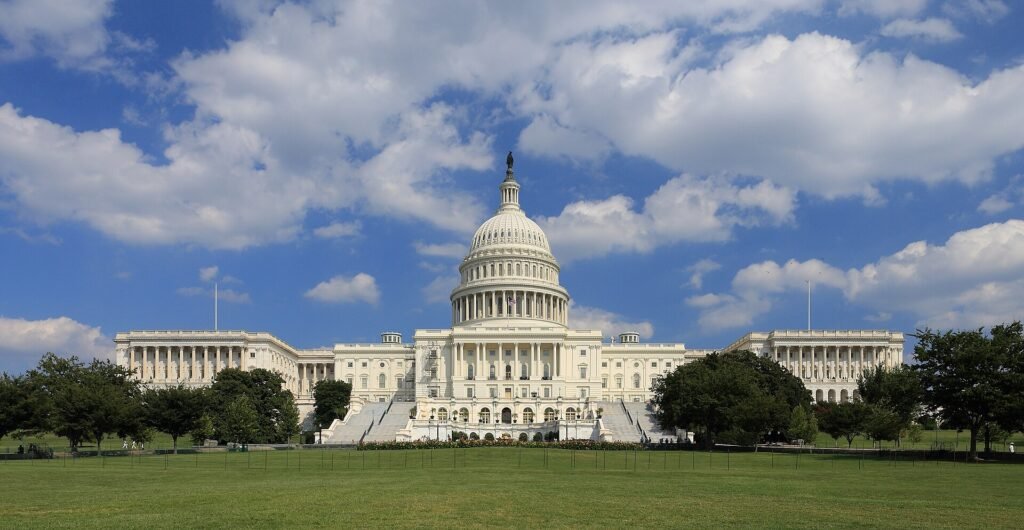
Photo: Martin Falbisoner · CC BY-SA 3.0 · via Wikimedia Commons