How LED volume stages work, and what they cost compared with location shoots
LED volumes project real-time backgrounds onto curved walls whose image tracks the camera. One published stage starts at $15,000 a day before technology add-ons.
An LED volume is a soundstage enclosed by large video walls that show a real-time 3D background behind the actors. The camera’s position is tracked, so the image on the wall shifts with every move, and the shot is captured in camera, with some fixes left to post. The approach gained wide attention after The Mandalorian, which filmed more than half of its first season this way.
The cost comparison runs differently from a location shoot. A volume carries a stage day rate, while location work adds travel, weather and crew hours. The sources reviewed here publish day rates and a few savings claims, but the only side-by-side comparisons are hypothetical.
How the wall, the engine and the tracker work together
The ILM stage used a curved wall about 20 feet high that wrapped 270 degrees around the set, with an LED ceiling, creating a performance space roughly 75 feet across. The panels were ROE Black Pearl BP2 units with a 2.84mm pixel pitch and peaked at 1,800 nits, though they were often run well below maximum.
The scenes ran in Unreal Engine in real time. The engine draws each background from the camera’s point of view, so parallax looks correct as the camera moves. Infrared markers on the camera were read by sensors ringed around the top of the walls. The lag from tracking data to the updated wall was about eight frames, so the team rendered image patches about 40 percent larger than needed, giving operators room to pan or tilt.
Pixel pitch also sets how close a camera can sit to the wall. A TV Technology article from February 2023 says a 1.5mm pitch allowed a camera about 3 feet from the wall, against 16 feet at the 2.84mm pitch used on The Mandalorian. Weaver of USC’s Entertainment Technology Center says this makes the method workable for mid-sized and smaller stages.
A published starting rate
WePlay lists its 70-foot curved LED volume, Stage A, at $15,000 a day as a starting estimate. Its XR Premium tier adds $18,000 a day for the Unreal Engine pipeline and camera tracking.
Why the wall also becomes the light source
The LEDs light the actors and practical sets, so the lighting in the virtual scene has to match what the camera records. Real props also bounced light back onto the digital assets, so ILM’s lighting team worked closely with the art department.
Direct sunlight was hard to reproduce. The screens act more like a large softbox, so crews lifted panels out and added spotlights. Moiré, the pattern that appears when a camera films a panel grid, pushed teams to shoot some backgrounds slightly soft. Long lenses with shallow depth of field could also throw the wall out of focus, which could not be fixed on set, so sharp replacement footage was added in post.
Where the savings reported on series come from
The clearest cost claim comes from Snowfall on FX. Variety reported in April 2022 that the show, then in its fifth season, saved up to $49,000 an episode. The savings came from fewer transportation man-hours, shorter shooting time and lighter crew loads, as the show moved from location shoots to LED walls with Orbital Virtual Studios.
Wedding, who supervised virtual production for seasons five and six, described savings in the February 2023 TV Technology piece. A 20-by-12-foot wall on casters was rolled between sets that stood for different cities, so the production did not need to pay for two walls. Virtual sets also allowed multiple car scenes without a separate car setup for each location.
Time savings are reported separately from cost. The same article puts turnaround at sometimes 30 to 50 percent faster, according to Erik Weaver, and says sets are typically ready before the actors arrive. It gives no dollar figure for that time.
A 2026 Thought Leaders piece from Forge Virtual Studios offers a simplified model. It estimates that a company move costs at least four hours, or about $20,000 in lost time, while one stage day would likely cost $20,000 and gain 3+ hours of time to perfect the shots. The author calls the model highly simplified and presents no measured result.
Where costs rise: assets, rigs and a separate department
The 2026 piece lists the costs that move the other way. Complex or custom digital assets need more money and time. Custom physical rigs for stunts are expensive, though the piece says one custom rig still saved money against location filming.
Virtual production also adds its own department, with prep time and budget of its own. The article says art department prep should overlap with virtual production prep, and it says the production designer and the virtual production supervisor need to talk as early as possible. Digital assets for the wall can come from second-unit footage, online libraries or custom artwork, and the article gives no prices for any of them.
Wedding made a related point in the 2023 article, describing virtual production as a workflow rather than an LED rental. Without a department head overseeing it, details can fall through the cracks. The comment concerns coordination, and the article puts no figure on it.
A volume’s day rate is only one line in the budget, and the sources list several others.
What published stage rates cover
WePlay’s pricing page lists Stage A, a main hall with a 70-foot curved P1.8mm LED wall in a space of more than 25,000 square feet, at a starting rate of $15,000 a day. Its XR Premium tier adds $18,000 a day for Disguise media servers, an Unreal Engine pipeline, camera tracking and virtual production technicians. Added together, the two starting rates come to $33,000 a day, though the page quotes no such package.
The page lists no minimum booking hours. It describes all figures as starting estimates, with final quotes built around the stage, tech level, crew, equipment, duration and special requests. Multi-day bookings receive preferred rates.
The 2023 TV Technology article also names two other facilities without prices: Amazon Studios’ Stage 15, with 34,000 square feet and an 80-foot LED wall, and NEP’s Stage 22 at Trilith Studios, with 18,000 square feet.
Where the stages are and where the figures disagree
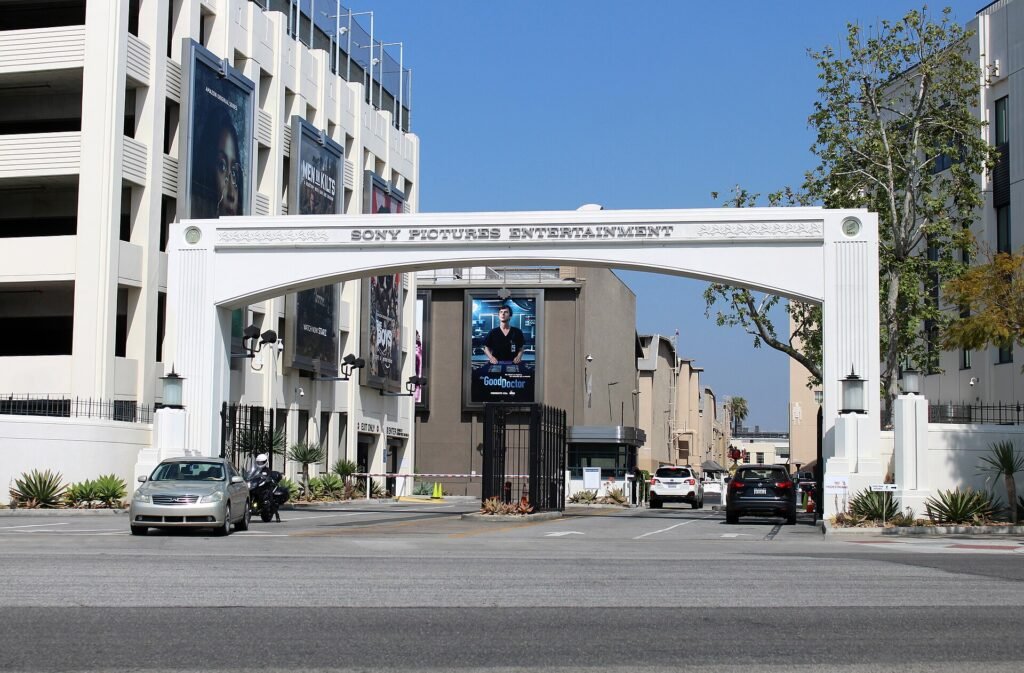
Sony’s stage is located at Sony Innovation Studios in Culver City. British Cinematographer reported the unveiling on October 7, 2022, describing Crystal LED panels with high brightness and a wide colour gamut. The article calls the stage the world’s largest, gives no wall dimensions, and says the concept dates to 2018.
At NAB Show 2026, Sony showed real-time off-axis colour correction for LED stages, which it said reduces post-production work by correcting colour shifts in camera. It also showed corner layouts with 90-degree walls and compact studios that use robotic camera systems, according to an AVNation article dated April 29, 2026.
The savings figures do not agree, and the sources give no episode count to link the per-episode and per-season numbers. Variety reports up to $49,000 an episode. A co-executive producer’s analysis cited in the same article puts the Season 5 total almost $500,000. The 2023 TV Technology piece says the series realized a savings of $1 million per season. The articles do not reconcile these, so the per-episode and per-season figures stand as separate, unverified claims.
Market size is also a forecast. TV Technology cites Research and Markets, which valued virtual production at $2.4 billion in 2021 and projected $3.1 billion by 2026. Those numbers date from early 2021, and the projected growth rate was revised upward later that year.
Related coverage: How The Irishman’s De-Aging Shows the VFX Pipeline Behind Digital Doubles; Why AI Is Automating Rotoscoping and Color Grading in Post-Production.
Photo: Coolcaesar · CC BY-SA 4.0 · via Wikimedia Commons