
Planned Parenthood-Backed Short ‘Before You’ Filmmaker Lauren Melinda Talks The Importance Of Destigmatizing Women’s Healthcare
According to data from Guttmacher Institute, as of 2024, the abortion rate was at 15.4 abortions per 1,000 women aged 15-44. And yet, within that data, a lot of those women’s stories go unseen and unheard. Compelled by the sparse nuance of discourse in the often-tough decisions that people make to get abortions, writer-director Lauren Melinda decided to bring her own personal story to life.
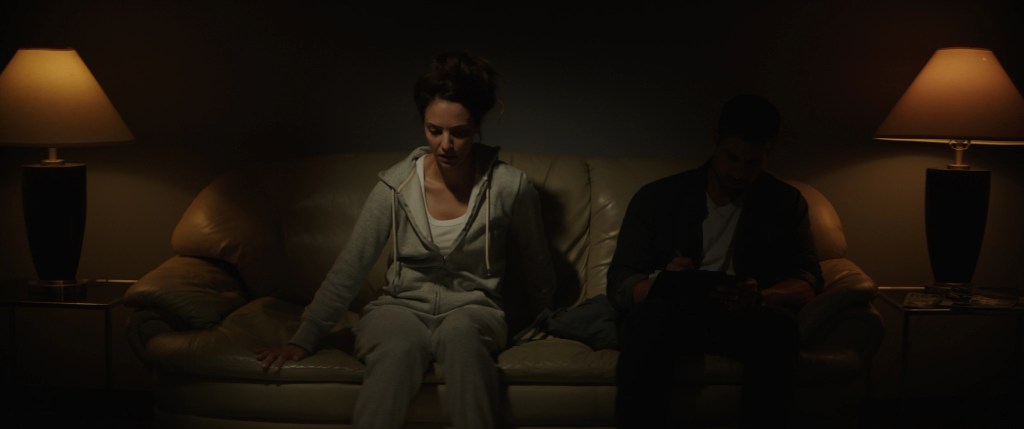
Before You follows a couple (played by Tony nominee Tala Ashe and Adam Rodriguez) dealing with the grief of ending a complicated planned pregnancy, the film examines the pain of suppressing trauma in the face of reproductive loss. The 15-minute short film has been selected by several Oscar-qualifying festivals, including the Cleveland International Film Festival, the St. Louis International Film Festival, NewFilmmakers LA, the Cinema Femme Short Film Festival and Film Independent’s Artist Development Showcase.
Below, Melinda speaks with Deadline about partnering with Planned Parenthood and navigating the vulnerabilities that come with telling a personal story.
DEADLINE: Where did the idea for this story come from?
LAUREN MELINDA: So, I have two girls and a new baby on the way. But between my two girls, I was pregnant, and we found out that the baby had some genetic issues, and my husband and I were faced with having an abortion. I don’t think I realized how deeply rooted it was in my body and mind until after I had my second daughter. I was experiencing this incredible sense of excitement, love, and gratitude for the child that I had just had. But simultaneously, I was having this immense feeling of grief and was just really feeling the loss of that other pregnancy. I was working on some other projects and talking to a friend about how I felt people don’t talk about this kind of loss within the abortion conversation. Generally speaking, the abortion conversation is usually about the unplanned pregnancy or cases involving young children or the age of the fetus. And those stories are so incredibly important, but it’s not the whole breadth of the conversation.
So, I started working on this project, thinking about how these memories existed within me and about the triggers. This was before the fall of Roe v. Wade, and I really didn’t know if I would ever make this film, but I at least knew I had to write it. And then, after the reversal, I told myself that I had to make it because it was more important than ever that stories like this one are out in the world, not necessarily from a political angle, but from a very human angle. It’s a personal story, not a PSA. Also, just to bring this film to life, I got lucky on my journey of finding the right producer. I found Rafa [Rafael Thomaseto] and Helena [Sardinha], who are just the most magical people and believed in my vision and the crazy transitions I had in the script. They were like, “I don’t know how we’re going to do this, but we’ll do it. We’ll figure it out.”
DEADLINE: You have your production company, Simbelle Productions. Can you talk about the work you’re doing in the film space and how you got connected with Planned Parenthood?
MELINDA: I named the company after my two girls. Our goal is to support and empower women who are doing female-driven stories with social impact. Before You is our inaugural film, so it was the testing ground for this concept for the nonprofit production company. Knowing that we wanted to focus on female-driven stories with social impact, we were really considering, OK, what does this look like? How do we create something unique that lets us extend these films’ lives beyond the festival circuit? So, we reached out to Planned Parenthood, knowing that, as a nonprofit, there would hopefully be a relationship to form, because a lot of these organizations have to be very careful about who they come on board with.
We worked with Caren Spruch, the head of the media and entertainment division at Planned Parenthood, and she’s worked with everyone from Jennifer Fox [The Tale] to Eliza Hittman [Never Rarely Sometimes Always]. She’s this super feisty, fun and amazing woman who is super passionate about entertainment. It was great that Planned Parenthood came on as a collaborator to support the film and then to all these different film festivals that we’ve been playing – which has been incredible because we’ve played mostly in red states. I think the film’s effect and power have an impact in those places.
Also, since the short film, we’re now on five feature films. Familiar Touch got nominated for two Gotham Awards, and they collaborated with Caring Across Generations, so now we have a strong relationship with them as well. Satisfaction also premiered at SXSW, and Blue Heron premiered at Locarno, winning Best First Feature and other awards at the Toronto International Film Festival. So, we’re working on the social impact campaign around that film.
We are trying to find new ways that aren’t so prescriptive, and hitting people over the head with like, “This is what you need to be feeling, just feel something and have a conversation about it. Open up around narrative film.” It’s like we say, it’s the vegetables and the chocolate cake. You’re not trying to serve people mashed broccoli. It’s like, how do you create films that are really, truly entertaining, but have that value and impact as well?
DEADLINE: Before You has an interesting color palette and stylistic choices, in my opinion. What were your inspirations, and what were you trying to convey to the audience thematically?
MELINDA: I come from the art world. I was a photographer for many years. I went to undergrad and grad school, studying studio art. So, I think inherently, I am a much more visual person. I don’t rely on dialogue in many of my films, and that’s because I want to portray very deep emotions. How do visuals and sound reflect a character’s internal life? And even in terms of the colors when we were working on it, we really were considering the entire section of her, and her husband driving, to have the abortion is all in gray scale. And then all the memories, starting with them realizing that they’re going to have a baby, to the pink, to then the orange of the mother’s room, which is a little bit darker and deeper. And then the kind of ochre, yellow of the aunt’s room, which then becomes a little bit more dangerous, to the green of the doctor’s office, then slowly into the gray, back into the pink of the baby’s room.
I just considered the psychological impacts of everything. I had the most incredible production designer, Danny Cistone. We worked for a month building all the sets because everything is done practically – there’s no VFX. We really pulled Tala [Ashe] through that couch multiple times. It was really important for me to use that filmic language to express those complex emotions.
DEADLINE: How did you find Tala, and how did you work with her on the emotions she needed to portray?
MELINDA: She’s the first person who came on the film. I was looking for an Iranian American actress. I had just seen some of her work and watched some of her interviews, and I could just tell that she was the person to talk to. We had a mutual friend who was on a show with her, so I asked him to talk to her about it. And he sent the script to her, and she loved it. Before we shot, we had Alexander Technique sessions with Jean-Louis Rodrigue, who introduced us to Adam Rodriguez, who played the husband character. So, she and I were able to share our personal stories with each other and get close. It was amazing.
DEADLINE: What would you like people to consider when watching this film?
MELINDA: What’s so important to me is destigmatizing abortion – removing the shame and the guilt and the feelings of being alone in that experience. Nobody wants to have an abortion. Even if it’s an unplanned pregnancy, nobody’s walking into a doctor’s office or a clinic wanting to go through this experience, but it is also so incredibly necessary. And there is love and connection that is still present even within an abortion. Abortions have historically, especially in this landscape, been vilified. This is something that men and women then carry with them. So, I just hope the film makes people feel less alone in their own experience and feel seen and understood.
Our experience so far with people who have seen the film are then able to share their stories with us. Some of them ask me how I managed to make this part of my life into a short film. I tell them that I feel this is the only way to create connection and feel less alone. I don’t believe in living in silence or shame for what occurred. Now, being pregnant with this baby, my husband and I were holding our breath, hoping that everything was OK, after having gone through the bizarre experience of putting out this film about our loss. Luckily, everything is OK, and we have a community to support us. It made me proud that we could change the conversation around this issue.
You can watch Melinda’s short film above.
[This interview has been edited for length and clarity]