SAG-AFTRA’s contract ratified June 4 limits synthetic performers and runs to June 2030
The 2026 TV/Theatrical agreement expands protections for digital replicas and sets limits on synthetic performers, building on rules first agreed in 2023.
Under the 2023 terms of SAG-AFTRA’s television and theatrical contract, a production must meet certain conditions before it creates or reuses a performer’s digital replica. The 2026 deal adds limits on synthetic performers, which the 2023 terms define as generative-AI content that makes people think it is a real person but is not recognizable as a specific person. Members ratified the current agreement on June 4, 2026, and it runs from July 1, 2026 to June 30, 2030.
The 2026 rules build on consent and payment provisions first agreed in November 2023, at the end of the strike that began in July of that year. Variety reports that the new deal builds on the 2023 gains, which allow replicas to be used only with consent and payment. LA Magazine reports that the contract expands earlier protections for replicas and adds terms restricting synthetic performers.
Replicas and synthetic performers follow different rules
Digital replicas include a performer’s voice or likeness. The 2023 terms, which were described as tentative in November 2023 before members voted in December, separate employment-based replicas from independently created ones. An employment-based replica is made in the performer’s work, with their participation, for use in material they did not actually perform. An independently created replica is made without an employment arrangement and either creates the impression that it is the performer or has the performer act as a character. The terms also cover digital alterations of a performance.
A synthetic performer is treated differently. Under the same terms, it is content created with generative tools that makes people think it is a real person, is not recognizable as a specific person, is not voiced by a real person, and is not covered by an employment agreement or a replica category. The rules do not apply to non-human characters.
Ratification figures
Members ratified the 2026 TV/Theatrical agreement on June 4, 2026, with 91.42% in favor. The contract runs from July 1, 2026 to June 30, 2030.
Consent before a replica is made or reused
Under the 2023 terms, creating a replica to produce material the performer did not perform requires explicit consent, signed or initialed by the performer. For employment-based replicas, use beyond what was performed or scripted also requires consent.
Independently created replicas need consent and bargaining under the same signed or initialed standard, unless the use matches what was performed or scripted. Digital alterations of a performance follow the same consent rule.
For independently created replicas, the requirements do not apply to uses permitted under the First Amendment. The 2023 terms list comment, criticism, scholarship, satire, parody, docudramas, and historical or biographical works as examples.
Payment, pensions and residuals
Under the 2023 terms, compensation for employment-based replicas is set out in detail in the full agreement. For independently created replicas, producers must make pension and health payments.
For the 2026 deal, LA Magazine reports that the AMPTP cites improved wages, pension and health benefits, and streaming residuals. The union’s president cites meaningful gains in compensation. Variety reports that the deal improves residual terms, according to the union’s executive director, Duncan Crabtree-Ireland.
The contract also eases the merging of the SAG-Producers Pension Plan and the AFTRA Retirement Fund. LA Magazine says the merger has been a goal since the 2012 SAG-AFTRA merger. Variety reports that studios will make an extra 1% contribution to the combined plans and that the merger still needs agreement from the other employers that contribute.
Variety says the funds have been separate since the two unions merged 14 years ago. Similar concerns were raised about the merger of the SAG and AFTRA health plans in 2017, which was followed by a significant curtailment in benefits a few years later. Union leaders have argued that the two cases are not alike, and that the actuarial projections on the pension merger make it clear that the merged plan will be stable well into the future. A handful of board members objected to the pension merger.
Synthetic performers under the 2026 deal
Variety reports that producers may use a synthetic performer only where it adds significant additional value over a live actor or that actor’s digital avatar. LA Magazine reports the same test. The union’s timeline describes the 2026 terms as further limits on synthetic performers, meant to protect members against replacement.
Under the 2023 terms, a synthetic performer that replaces a performer who would have been cast in a human role triggers notice to the union and an opportunity to bargain in good faith over appropriate consideration, if any. Variety reports that the 2026 deal gives the union notice and an opportunity to bargain if studios begin using synthetic actors.
The 2023 terms also require bargaining and the performer’s consent when a synthetic performer’s principal facial features, meaning the eyes, nose, ears or mouth, are recognizable as those of a specific real performer and were created with generative tools.
Variety reports that the union cannot call a strike over the issue before 2030. It also reports that some union members argue studios will face little constraint in using synthetic performers and want tighter restrictions.
Producers may use a synthetic performer only where it adds “significant additional value” over a live actor or that actor’s digital avatar.
Consent after a performer dies, and how disputes are handled
For employment-based replicas, consent continues after death unless explicitly agreed. For independently created replicas and digital alterations, the performer’s estate can give consent. If no estate can be found, the union can.
The 2023 terms make claims about digital alterations and synthetic performers subject to arbitration, with remedies limited to monetary damages. Variety reports that the union argues the 2026 arbitration provision and the replica language together will limit replicas to a handful of edge cases.
Timeline, vote and what productions must do
The union’s timeline runs from the July 2023 strike, which the union says was due in part to employers’ unwillingness to offer a deal that includes fair and fundamental A.I. protections, to the November 2023 agreement. Members ratified that deal in December 2023.
Other agreements followed. The Interactive Media Agreement, ratified in July 2025, adds consent and disclosure requirements for digital replicas and lets performers suspend consent for new material during a strike. The commercials contracts, ratified in May 2025, are described by the union as containing its strongest contractual guardrails to date. The Network Television Code agreement, ratified in August 2025, commits to adopting future terms from the 2026 talks.
LA Magazine reports that talks began Feb. 5, 2026, recessed March 15, resumed April 27 and concluded May 2. The board recommended the contract in May. Members voted on June 4, with 91.42% in favor.
Turnout is given as 19.25% by LA Magazine and 19.3% by Variety. Variety also reports board approval at 89%.
Variety reports that the contract runs four years, where three is typical, and that some argued a four-year term could be a mistake given the pace of change in the technology. Variety also reports that the AMPTP remained in talks with the Directors Guild of America, whose contract was set to expire June 30, and that jobs, AI and health care were the key issues.
Under the 2023 terms, productions must obtain signed or initialed consent to create a replica for material a performer did not perform. A synthetic performer used in place of a performer who would have been cast in a human role requires notice to the union and an opportunity to bargain.
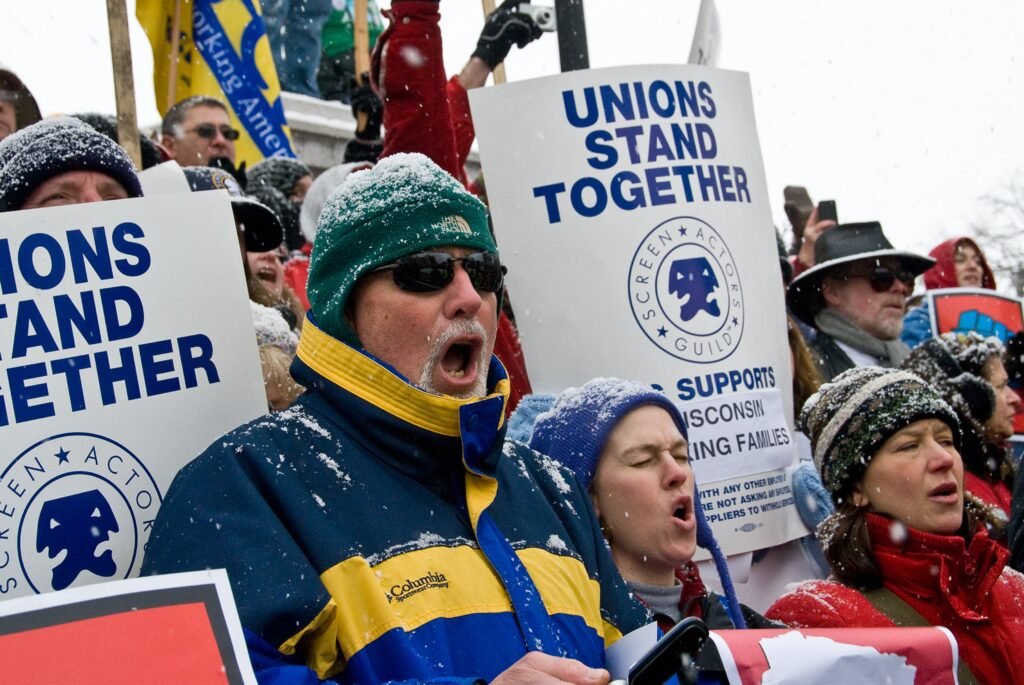
Photo: Susan Ruggles from Milwaukee, USA · CC BY 2.0 · via Wikimedia Commons